From Classroom to Cu Chi: When History Gets Real
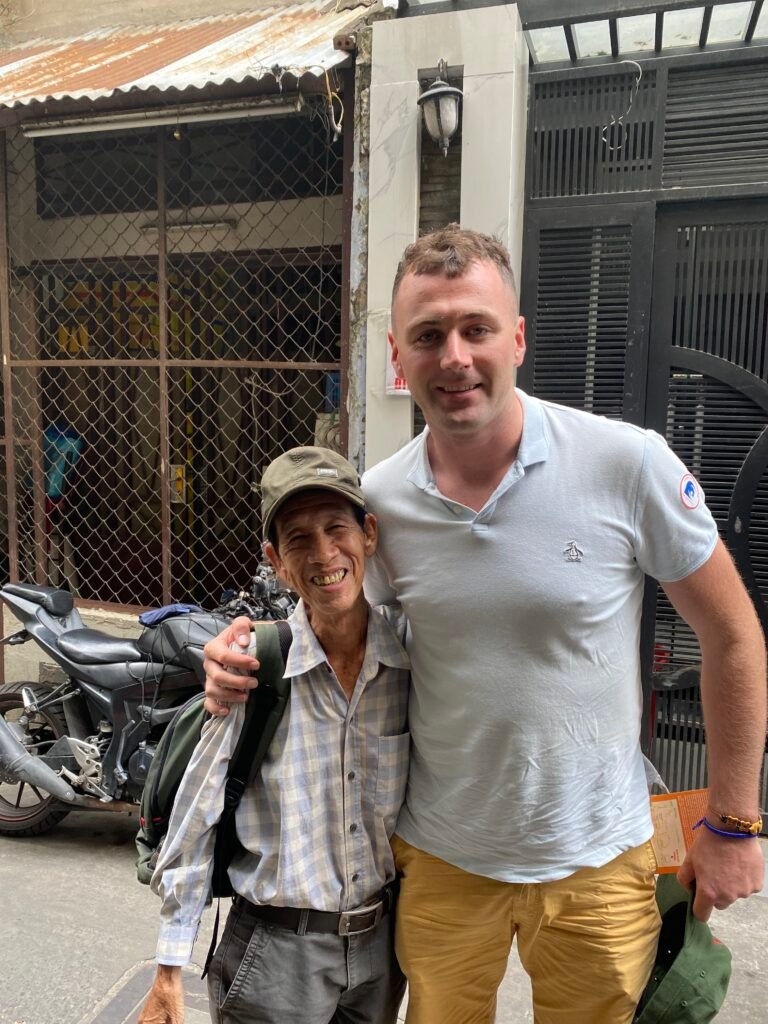
History, we’re often told, is written by the victors. Yet, the stories that truly resonate, the lessons that carve themselves into our understanding, are often whispered from the trenches, hummed in the rice paddies, and echoed from the mouths of those who merely survived. My recent journey through Vietnam—specifically, the haunting labyrinth of the [1] Cu Chi Tunnels—ripped apart the neat, academic narratives of conflict and replaced them with a visceral, often uncomfortable, reality.
The Ivory Tower vs. The Muddy Boots
I found myself pondering this chasm while on tour with some young English lads. Bright, articulate, and well-versed in history from their expensive education, they represented a segment of society often destined to pen those very history books. But as one casually declared, “I hate the poor,” after learning of my Irish public education background, a stark truth emerged: privilege, while affording knowledge, can inadvertently insulate young, malleable minds from the raw, unvarnished struggles of existence.
Their lives, untouched by the “tough day’s manual labor” that defines the daily grind for millions—from the garment factory workers to the late-night street vendors I witnessed—had yet to grapple with the inconvenient fact that for many, poverty is not a choice, but a circumstance. This detachment, I believe, is the double-edged sword of an insulated education.
Consider the notion of ‘looking down’ to count one’s blessings. In some Asian philosophies, this can be a pathway to gratitude. Yet, as the lad’s unvoiced prejudice suggested, it can also morph into a mechanism for self-affirmation that lacks empathy, failing to acknowledge the systemic inequities that create such disparities. We, in Ireland, are perhaps guilty of the inverse, perpetually “looking up,” demanding more without appreciating what we have as many were stripped of what they have. Both perspectives, devoid of genuine understanding, risk obscuring the fundamental human experience.
The “Poison” of Desperation: A Disturbing Contrast
This brings me to a particularly unsettling memory from the Cu Chi Tunnels, a detail so stark it demands critical examination. Our guide, Tommy, a resilient survivor who fought on the South Vietnamese side, recounted how the Viet Cong deployed ingenious, often brutal, traps. When interrogating captured fighters about the “poison” they used on their impalement spikes, the answer was chillingly simple: not exotic snake venom or rare plant extracts, but human faeces(excrement).
Herein lies a profound, albeit grotesque, lesson:
- Sophistication vs. Necessity: The “sophisticated” world, epitomised by advanced weaponry and vast military budgets, often overlooks the brutal pragmatism born of desperation. The contrast between this crude biological weapon and the modern, chemical agents of war (like Agent Orange, sprayed to clear the very jungles the Viet Cong navigated to this day is causing abnormalities and defects in thousands who are limbless or deformed) is stark. One engineered in laboratories, the other, a grim ingenuity born from absolute scarcity.
The Haunting Laughter of the Abandoned Ally
Tommy’s story, as a South Vietnamese combatant left behind, encapsulates the ultimate betrayal in war: abandonment by an ally. He had educated himself to assimilate, to speak English, and to translate for the US soldiers. His aspiration, candidly voiced to me—“I want to be like you guys,” meaning free to travel—was the ultimate symbol of the future his “communist brothers and sisters in the north” summarily denied him.
Listening back to the recordings, I recall the uneasy laugh that often punctuated his anecdotes. It was a sound that highlighted the hidden sorrows and harrowing nature of his abandonment. Tommy was intimately surrounded by the soldiers he served, only to be left behind when the withdrawal occurred. He was an ally who was never afforded the chance to travel to the US, the very nation he aided.
Today, he works in the place he was brought to fight—the land of the Cu Chi Tunnels—not as a free man exploring the world, but as an artifact of a conflict, guiding the wealthy tourists who effortlessly live the life he was denied.
- A Fate Denied: Tommy’s fate starkly contrasts with those he encountered. He is anchored to the geography of his war, while others—were lucky enough to escape and scatter across the globe. Tommy’s continued presence at the historical site, telling his tale, is a living, breathing footnote on the winners and losers of war, proving that even among the survivors, freedom is the most valuable of spoils. His laughter, tinged with resignation, speaks volumes about a life spent enduring the ultimate loss: the loss of a desired future.
The Echo of Gunfire: When Entertainment Becomes Terrifying
Later in the tour, an opportunity arose to fire an AK-47. For the tourists, it was an adrenaline-fueled novelty, a chance to ‘play’ war. But the sheer ring of gunfire [2], the raw power, was terrifying. It wasn’t entertainment; it was a fleeting glimpse into the chaos and terror faced by the “nineteen and twenty-year-old boys” [3] on both sides, conscripted and often untrained.
This moment forced a realisation: the nuance of war is easily overlooked by the young. The experience echoed the plight of the “poor English infantry deployed in my country Ireland” and elsewhere, led by “educated gentry” who might understand strategy, but rarely the visceral, stomach-churning reality of combat.
Differentiating Between Classroom and Reality
Tommy’s account further illuminated the complexities. He, like many from the South, had no choice but to fight. The Viet Cong boys, too, were often conscripted, caught between “country people v city people” where “sons had to fight family members.” This internal conflict is often overshadowed by the larger narrative of external aggression.
Today, in Vietnam, Marxism-Leninism is a compulsory subject in the national curriculum [4]. This reflects the “victors'” narrative, shaping how young, malleable minds are taught their own history. While it provides a framework for understanding the nation’s struggle against colonialism and imperialism, it can, like any singular historical lens, simplify the deeply human nuances of war.
The “classroom” version might focus on ideological triumph and national liberation. The “reality,” as shared by Tommy, reveals the low morale of the American soldiers who “did not want to be there,” the “many protests” back home (including figures like Jane Fonda [5]), and the rapid collapse of the South Vietnamese forces once American support vanished. It details the strategic brilliance of the North, who, with “unlimited weapons” from communist allies, exploited the logistical challenges of an enemy “thousands of miles away.”
This journey underscored a vital lesson for Animo+ Education: the critical need to differentiate between the sanitised classroom narrative and the messy reality of history. When examining conflict, it’s not enough to simply list winners and losers. We must explore the human cost, the ethical dilemmas, the ingenuity born of desperation, and the lasting scars on individuals and nations.
For young minds, understanding history isn’t just about memorising dates and names; it’s about developing empathy, critical thinking, and a nuanced appreciation for the complex forces that shape our world. It’s about recognising that sometimes, the most profound lessons are found not in grand pronouncements, but in the harrowing tales of survival, the “poison” of the poor, and the terrifying echo of an AK-47 in a foreign land.
Footnotes:
[1] The Cu Chi Tunnels were an extensive network of connecting underground tunnels used by Viet Cong fighters as hiding spots during the Vietnam War. They played a crucial role in their military operations.
[2] The sound pressure level (SPL) of an AK-47 firing is around 160-165 decibels, a level capable of causing immediate and permanent hearing damage. (General information on firearm decibels).
[3] The average age of U.S. military personnel serving in Vietnam was 19. The average age of the combat infantryman was 22.
[4] Marxism-Leninism is indeed a compulsory subject in Vietnamese higher education and is integrated into various levels of the education system to reinforce the ruling Communist Party’s ideology.
[5] Jane Fonda’s controversial visit to Hanoi in 1972, where she broadcast anti-war messages and was photographed on a North Vietnamese anti-aircraft gun, made her a focal point of anti-war sentiment in the U.S.
